- Introduction
- Why Cats Scratch Furniture in the First Place
- Why Punishing Your Cat Doesn’t Work
- Give Your Cat Better Scratching Options
- Make Furniture Less Appealing
- Trim Your Cat’s Nails Regularly
- Increase Play and Mental Stimulation
- Use Positive Reinforcement
- When Scratching Might Signal Stress or Health Issues
Introduction
How to stop your cat from scratching furniture is a question almost every cat owner asks at some point.
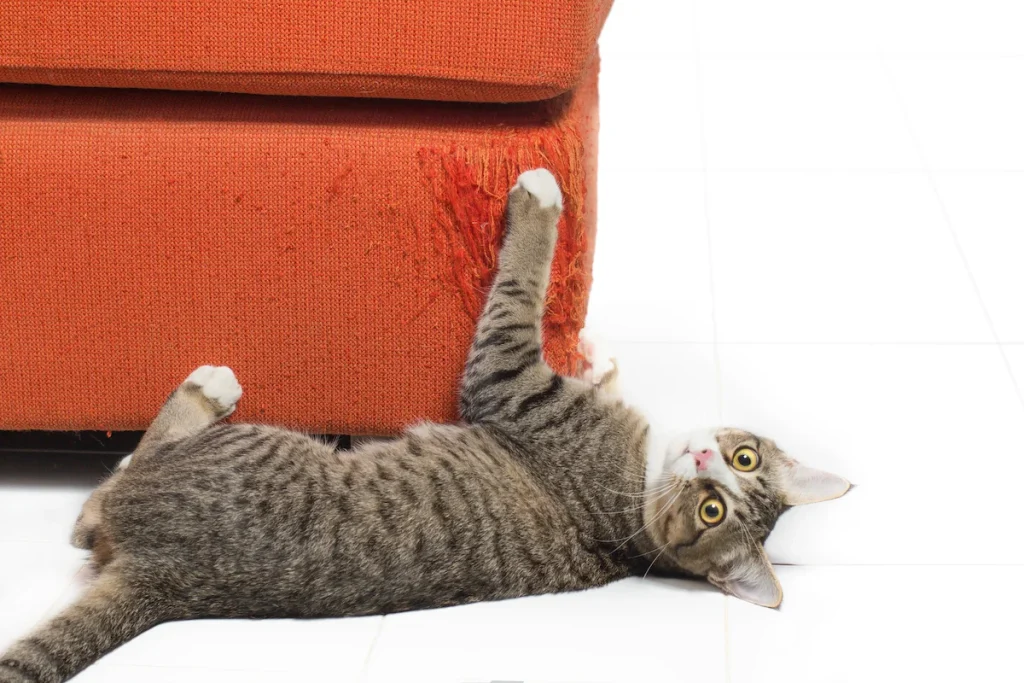
If you live with a cat, chances are you’ve watched them dig their claws into a couch, chair, or rug you actually care about. It’s frustrating, especially when it feels like no matter what you do, your cat keeps choosing the furniture over anything else.
The truth is, scratching is not bad behavior — it’s a completely natural and necessary part of being a cat. The goal isn’t to stop scratching altogether, but to redirect it in a way that works for both you and your cat.
Here’s how to stop your cat from scratching furniture without punishment, fear, or declawing.
Why Cats Scratch Furniture in the First Place
Scratching serves several important purposes for cats. It helps them stretch their muscles, maintain healthy claws, and release stress. Scratching also leaves visual marks and scent signals, which makes it a normal way for cats to claim their space.
Furniture becomes a target because it’s often sturdy, tall, and placed in high-traffic areas — exactly what cats prefer. Sofas and chairs are also soft enough for claws to sink into, making them very satisfying to scratch.
Understanding this makes it easier to fix the problem without fighting your cat’s instincts.
Why Punishing Your Cat Doesn’t Work
Yelling, spraying water, or physically stopping your cat may seem like quick solutions, but they usually make things worse. Cats don’t associate punishment with scratching — they associate it with you.
This can lead to stress, fear, or secret scratching when you’re not around. Instead of stopping the behavior, punishment often damages trust and increases anxiety.
The most effective approach is redirection and environment changes.
Give Your Cat Better Scratching Options
Cats scratch where it feels right. If the only good surfaces are your furniture, that’s what they’ll use.
Scratching posts and pads work best when they match your cat’s preferences. Some cats love tall vertical posts they can stretch against, while others prefer horizontal scratchers on the floor. Texture matters too — many cats favor sisal, cardboard, or rough fabric over carpet.
Placement is just as important as the scratcher itself. Put scratching posts near the furniture your cat targets most, as well as near sleeping areas where cats naturally like to stretch.
When the right option is in the right place, most cats choose it on their own.
Make Furniture Less Appealing
While offering alternatives, it also helps to make furniture less attractive to scratch.
Furniture protectors, double-sided tape, or scratch-resistant covers can discourage clawing without hurting your cat. Some cats dislike certain textures and will avoid them altogether.
You can also use cat-safe deterrent sprays on furniture areas they frequently scratch. These sprays don’t punish — they simply make the surface unappealing.
Trim Your Cat’s Nails Regularly
Regular nail trimming reduces damage and makes scratching less destructive. It doesn’t stop the behavior, but it softens the impact.
If you’re new to trimming cat nails, start slowly and keep sessions short. Many cats tolerate it well when paired with treats and a calm routine.
Learning how to stop your cat from scratching furniture takes patience, but small changes make a big difference.
Increase Play and Mental Stimulation
Cats often scratch more when they’re bored or stressed. Interactive play helps burn off energy and reduce the urge to release tension on furniture.
Daily play sessions using wand toys, laser toys, or puzzle feeders can make a noticeable difference. A mentally satisfied cat is less likely to redirect frustration onto your couch.
According to guidance from the American Veterinary Medical Association, scratching is a normal feline behavior that helps cats stretch, mark territory, and maintain healthy claws.
Use Positive Reinforcement
When your cat uses a scratching post or pad, reward them. This can be as simple as verbal praise, a treat, or gentle affection.
Cats repeat behaviors that lead to positive outcomes. Over time, they’ll naturally gravitate toward approved scratching spots.
Once you understand how to stop your cat from scratching furniture, protecting your home becomes much easier.
When Scratching Might Signal Stress or Health Issues
If scratching suddenly becomes intense or obsessive, especially alongside other behavior changes, it may be a sign of stress or discomfort.
Look out for changes in appetite, litter box habits, or increased hiding. In these cases, it’s worth checking in with your vet or reviewing trusted veterinary resources like the American Veterinary Medical Association for guidance.
If your cat’s behavior has changed suddenly, you may also find our guide on 10 Warning Signs Your Cat Might Be Sick helpful.
Learning how to stop your cat from scratching furniture doesn’t require harsh methods or declawing. With the right setup, patience, and understanding, most cats naturally shift their scratching to appropriate places.
Your cat isn’t trying to ruin your home — they’re just being a cat. A few thoughtful adjustments can protect your furniture while keeping your cat happy, healthy, and confident in their space.
FAQs
Why does my cat keep scratching furniture?
Cats scratch furniture to stretch, sharpen their claws, and mark territory. It’s a natural behavior, not bad behavior.
How do I stop my cat from scratching furniture?
Provide scratching posts, place them near problem areas, and use deterrents like double-sided tape on furniture.
Do scratching posts really work for cats?
Yes, scratching posts work when they match your cat’s preference and are placed in the right location.