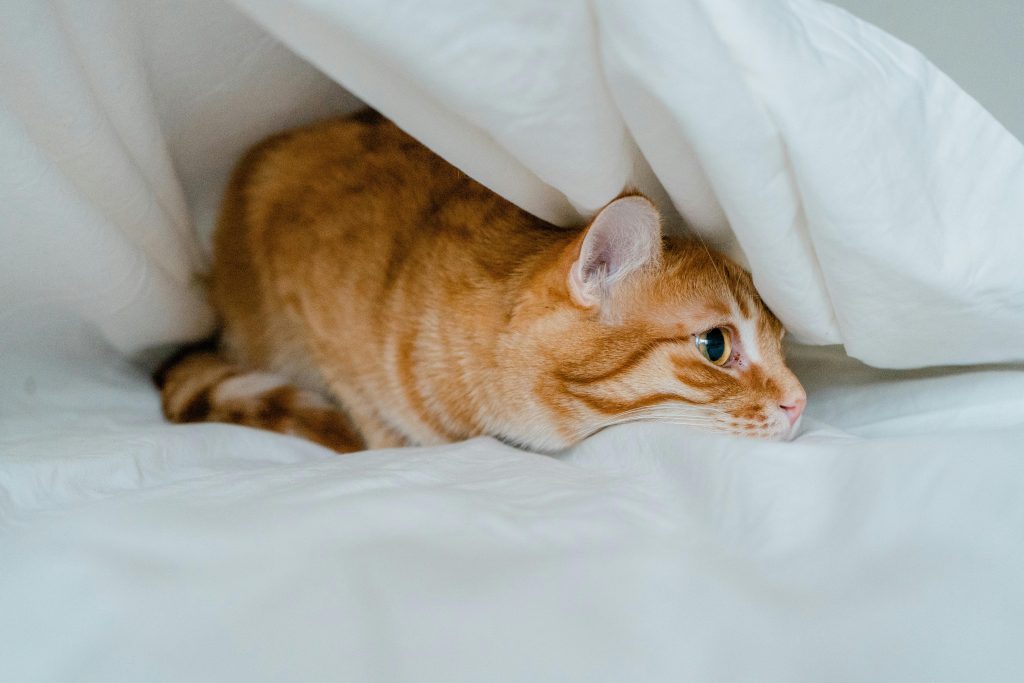
Why is my cat hiding under the blanket is something many cat owners wonder after spotting a mysterious lump moving under the covers. It can look odd at first, but in most cases, it’s completely normal. Cats are naturally drawn to warm, enclosed spaces, and blankets offer both. Still, sometimes this behavior can mean more than just comfort.
Here are the most common reasons your cat hides under blankets and when you should actually pay attention.
1. Your Cat Is Looking for Warmth
Cats love heat. Blankets trap warmth and create a cozy environment that feels safe and comfortable. This is especially common in colder weather or rooms with air conditioning. If your cat only does this when it’s chilly, there’s nothing to worry about.
2. It Feels Safe and Secure
Under a blanket, your cat is hidden, surrounded, and protected from noise or sudden movement. This mimics the kind of shelter cats instinctively look for. For many cats, it’s simply a place where they can fully relax without feeling exposed.
Some cats hide due to stress, which is explained in our article on cat suddenly acting aggressive.
3. Your Cat Might Be Stressed
Hiding can also be a way to cope with stress. Changes like new people, loud noises, moving furniture, or a new pet can make cats feel overwhelmed. A blanket becomes a quick, safe escape. If you’ve noticed other behavior changes, it’s worth paying closer attention.
4. It’s Natural Instinct
Even indoor cats still carry strong instincts. In the wild, hiding helps them stay safe and observe their surroundings. A blanket acts like a modern version of a den, which is why even confident cats sometimes disappear under it.
5. Your Cat Wants Quiet Time
Cats aren’t always in the mood to interact. Sometimes they just want a break. Hiding under a blanket gives them a quiet, low-stimulation space where they can rest undisturbed. If they come out calm and normal, it’s just their way of recharging.
A cat hiding under the blanket is often trying to feel warm, secure, or less exposed to their surroundings.
6. It Could Be a Sign Something Is Off
While usually harmless, hiding can sometimes signal illness or discomfort. Cats often withdraw when they don’t feel well. If this behavior is new and comes with loss of appetite, low energy, or litter box changes, don’t ignore it. According to the American Veterinary Medical Association, behavior changes can be an early sign of health issues:
When Should You Be Concerned About Your Cat Hiding Under Blankets?
While hiding under blankets is often normal, certain signs mean it’s time to pay closer attention. If your cat’s behavior changes suddenly, or they stay hidden for most of the day, this could indicate stress or illness. Other warning signs include loss of appetite, low energy, or changes in litter box habits. In these cases, a veterinary checkup is recommended to rule out any health issues. Remember, behavioral changes can be early signals that something is wrong.
How to Make Your Cat Feel Safe And Comfortable
If your cat enjoys hiding under blankets, there’s no need to discourage it. To ensure they feel secure, provide cozy bedding, a quiet resting space, and a stable daily routine. Offer gentle affection but avoid forcing interaction when your cat is seeking solitude. Giving your cat a safe retreat respects their natural instincts and helps them recharge peacefully.
So, why is my cat hiding under the blanket? In most cases, it’s about warmth, comfort, and feeling safe. It’s a normal behavior that reflects your cat’s instincts. As long as your cat is eating, active, and behaving normally, there’s usually nothing to worry about. Sometimes, that little blanket lump is just your cat enjoying a peaceful moment.
FAQs
Is it normal for cats to hide under blankets?
Yes, it’s a common behavior. Cats seek warmth and security, and blankets provide a cozy, enclosed space that fulfills these needs.
Could hiding under blankets indicate illness?
Sometimes. If hiding is accompanied by other signs like reduced appetite, lethargy, or changes in bathroom habits, it could be a sign your cat is unwell and needs veterinary attention.
How can I encourage my cat to come out of hiding?
Be patient and gentle. Provide a calm environment with soft bedding and avoid forcing interaction. Let your cat feel safe and come out on their own terms.